


Those Native Eyes: My Search for Indigenous Research Methodologies.
- Buster Landin (He/him)

- Sep 13, 2021
- 4 min read
Have you ever looked at something with Indigenous eyes? With “Indian” eyes, Tlingit eyes, or Anishinaabe eyes. I have found that my standard mode of operation is to view the world utilizing my Indigenous pedagogy and epistemology. I kind of assumed that everyone else sees it that way too. But I know deep down this isn’t true. I recall Dr. Kim Tallbear’s piece in GLQ: A Journal of Lesbian and Gay Studies titled Indigenous Reflection on Working Beyond the Human/Not Human, where the profoundness of Dr. Tallbear’s main claim was to point out that in current euro-centric spaces and societies around the world that indigeneity, the indigenous epistemology our world view is situated firmly with LGBTQ+ as other (Muñoz et al. 2015). This was eye opening for me to realize the violent and brutal removal of rights and erasure by the societal apparatuses of othering was a shared experience with this community. Although it shouldn’t have come as a surprise to me, it does make sick sense in the society at large.
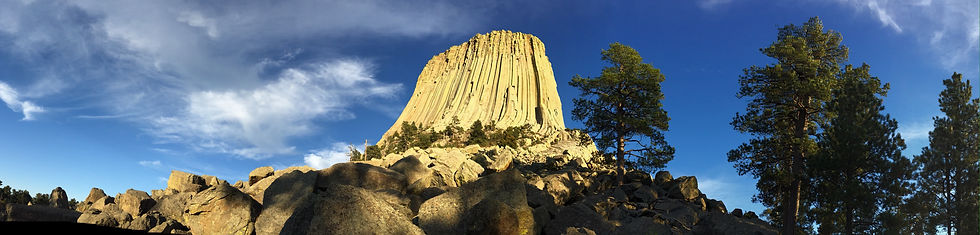
Sometimes my vision snaps from one mode of seeing to another seamlessly without my knowledge or awareness of it occurring, sometimes without permission. There are times particularly when I stand in a new place, I look at the landscape as a geologist. Fortunately, I have never felt that my geologic training was part of the extractive destructive way of utilizing this science. I have always looked at geology in my naïve native way as a means to understand the entire story of the Earth. I behold the splendor and consider the geologic forces that created the landscape from ancient orogenic episodes to recent glacial advances that have sculpted the land into its present form. I feel that my gaze in these instants span the approximately 4.6 billion years of Earth history that typifies geology. However, I have felt if I truly want to understand a place, I must look at the landscape from point of view of the Indigenous people that called this place their home.
My indigenous gaze catches me filling in thousands of years of observations and life experiences from my ancestors and relating it to the landscape. I see places where I must pay respects to all my heritage: the Anishinaabe for my mother and the Tlingit for my father. I see the places where you can find nibi/héen (water) or places where I can find my brothers. I was recently reminded that Indigenous ways of knowing, and the knowledge held in my gaze did not come from sitting down and reading a book it comes from listening. (Although, I must admit in my little Indigenous world it sometimes does happen that way because I am an Indigenous book lover of Indigenous books. I look at is a way to re-establish that extracted knowledge back where it belongs in the minds of native people.) Listening to stories from my elders is the foundation on which my gaze is built. To me, this typifies the strength of the oral tradition among the Indigenous people I am familiar with, and it is substantial and important. As result of this strength, I have had to wrestle with the fact that listening, and storytelling are part and parcel of my heritage but are typically not found in academic settings. Here you will find the words research, investigation, and study these are extractive and are situated by power imbalances of subject versus researchers.
My grandmother a graduate from Haskell Indian School in education told me she felt that Native people will not flourish until people who look like them are in positions of power. She specifically meant educators and administrators when they look the same as the native students in these places all things are possible. This sentiment is reflected in Dr. Tallbear’s book Native American DNA : Tribal Belonging and the False Promise of Genetic Science that reflects on the current status of the academic fields. “Collaborative publications are not alone sufficient to alter longstanding power relations in knowledge production. Other approaches are necessary in order for indigenous peoples to be real agents of knowledge production. Research questions need to be conceived from indigenous standpoints as well as, or instead of, from nonindigenous-researcher standpoints. In addition, innovative methods need to be developed to account for indigenous moral and epistemological frameworks.” (Tallbear, 2013)
I am now behind enemy lines as it were. In the den of the enforcer and perpetrator of the hierarchies established by the patriarchy that conducted scientific racism research is a part of the past of my chosen field of study anthropology and archaeology. I am fairly certain I am the lone Indigenous person in the department and must face the gaping maw of this subject and attempt to Indigenize it, to influence archaeology to make it compatible with the indigenous world view. My reaction to these wrongs seems very subdued. It took a whole year for me to realize, formulate, and to frame how I approach my interests so that I can make it clear that I am not conducting research but there is a story I wish to tell. A story informed by those moments of Indigenous gaze there is indigenous knowledge that informs my story.
This story will be assembled via active listening of elders and clan leaders as well as direct observations of the land in connection with my interests. I will take these Indigenous ways of knowing and seeing, meld them together with my own observations so that it coalesces into a narrative about the Indigenous uses, innovations, and ages of the fish catching technology synonymous with the Native peoples of Southeast Alaska. I hope that these actions are a rebellion of the highest order. It is a new hope, a new experience for me, I often wonder “Am I doing enough?” I respond most often with “I don’t know, I think so!” I can only hope my ancestors like Dorothy Bluejacket my grandmother and descendant of Bluejacket war chief of the Shawnee, see it that way too and find pride in my steps.
Works cited:
Muñoz, José Esteban, Jinthana Haritaworn, Myra Hird, Zakiyyah Iman Jackson, Jasbir K Puar, Eileen Joy, Uri McMillan, Susan Stryker, Kim TallBear, Jami Weinstein, and Jack Halberstam 2015 Theorizing Queer Inhumanisms. GLQ: A Journal of Lesbian and Gay Studies 21(2–3):209–248.
TallBear, Kim. 2013 Native American DNA : Tribal Belonging and the False Promise of Genetic Science, University of Minnesota Press.


Comments