


Uneasy Alliance? Western Science and Native Traditions Coalesce.
- Buster Landin (He/him)

- Jul 1, 2021
- 5 min read
I grew up surrounded by lakes and the woods on the Lac du Flambeau Chippewa reservation in northern Wisconsin. The Lac du Flambeau Ojibwe have long practiced the art of okeywag (fish decoys) carving. Many people continue carving and passing on the traditions of winter spearing for large predatory fish such as the ginoozhe (Northern Pike: Esox Lucius) and maashkinoozhe (Muskellunge, muskie, musky: Esox masquinongy). A couple of interesting tidbits of information about the names of these fish as noted in the previous sentence the name for pike = ginoozhe, Maash is added which is an Ojibwe root word for bad to create maashkinoozhe which literally translates to bad pike. The binomial scientific name for the muskellunge Esox masquinongy is derived from the Anishnaabe word maashkinoozhe.). Winter spearing is accomplished by lowered the decoys into a lake through a two-foot diameter hole then jigging the decoy up and down. The hole is covered traditionally by a tiny 3 - 4 foot high teepee to darken the hole, so the spearer can see into the depths of the water.
A few years ago, I had to move about 10 hours away to the south to finish my geology degree. One very hot and humid afternoon I had a strong urge to create something Ojibwe, something traditional. I was homesick pining for a cool lake as a poor college student with two children traveling 10 hours back home was not an option. To my mind there are few things that are more time-honored and distinctly Lac du Flambeau Ojibwe than fish decoys. I decided I wanted to carve a fish decoy but I have never been taught how. At that time and I believe even today in the age of information fish decoys is not something you just go out and find plans to build. The internet was not really a thing yet all I had was my memory of seeing them when I was younger you usually had someone show you how to carve a decoy.
My quest to create a traditional Ojibwe fish decoy started with a chunk of basswood and some carving tools, but where to begin? Being cut off from the intergenerational transmission of information about the indigenous knowledge accumulated over time and tested perfecting the fish decoy I didn’t know how to answer my question where to begin. Thinking about it more I did one thing I am sort of good at and that is I got nerdy. I started think about in the absence of my community’s “reference book” how does someone find out about the physical world. What was the best modality to accomplish such a task as how to carve a fish decoy and what should come to mind other than to use the human endeavor created to answer questions methodically and systematically, but Science!
I knew I had to carve a basic fish shape and the fish shape should probably look like something that swims in the lakes of Wisconsin. I had also observed lead filled cavities on the bottom of fish decoys. But how much lead? How big of a cavity do you need? My first consideration was to determine how much buoyance do I need to overcome. I found a reference book at the library that listed buoyance of various woods in g/cm3. I determined the volume of wood in the decoy by the water displacement method. I have been toying all along with Archimedes principles all along and with a bit arithmetic and I calculated the amount of buoyance force I needed to overcome with the lead. I wanted to decoy to sink and not be neutrally buoyant so added a few more grams to the final calculation. I now had the amount of lead needed to sink the fish decoy and using the density of lead 11.29 gram/cm3.

I was then able to calculate the volume of lead needed to achieve that weight. I started carving the lead cavity in the bottom of the fish decoy and just kept checking the volume of the cavity by filling it with water and checking the volume of water I just filled the cavity with and when the two volumes matched, I had the correct sized cavity for the amount of lead needed. I melted some lead, added some glass eyes, and some copper fins and I pretty much had a fish decoy.
After I made this fish decoy, I mailed to my mother back home and asked her to show it to John Snow to see what he thought. He was the most well-known carver in Lac du Flambeau at that time. My mother called me and told me that John Snow was flabbergasted and asked where she got the decoy and when she told him that her son (me) made it. His response was “I never knew he carved!” Well, I didn’t really, and this was my first decoy. John told my mother when I get back into town to stop by his house because he had to talk to me.
I came into town for the annual summer pow-wow, and I am little a nervous heading out to his house. John wanted to know how I figured out how to carve the fish decoy because he knew that I didn’t carve and I never attended one of his classes at the Tribal museum on fish decoys. I explained to him the western scientific process that I used and then he showed me how he made fish decoys. The only real difference that I could ultimately see was the measurements that I made to determine volumes of things. Was my process a short cut in one way it was but what I missed was the nuances of the fish decoy and its’ creation. John showed me other processes that he learned coupled with a lifetime of experience that refined my decoy that made it work better. Theses processes were the result the refinement derived from the accumulation of observations and multiple iteration of forms in what can only be called experimentation that have been carried out for millennia and have stood the test of time. (The first time I used this science derived decoy a good-sized pike came streaking up to the decoy within seconds of lowering it in the water. My friend missed the pike with the spear, and just as quickly it swam away. I have witnesses.)
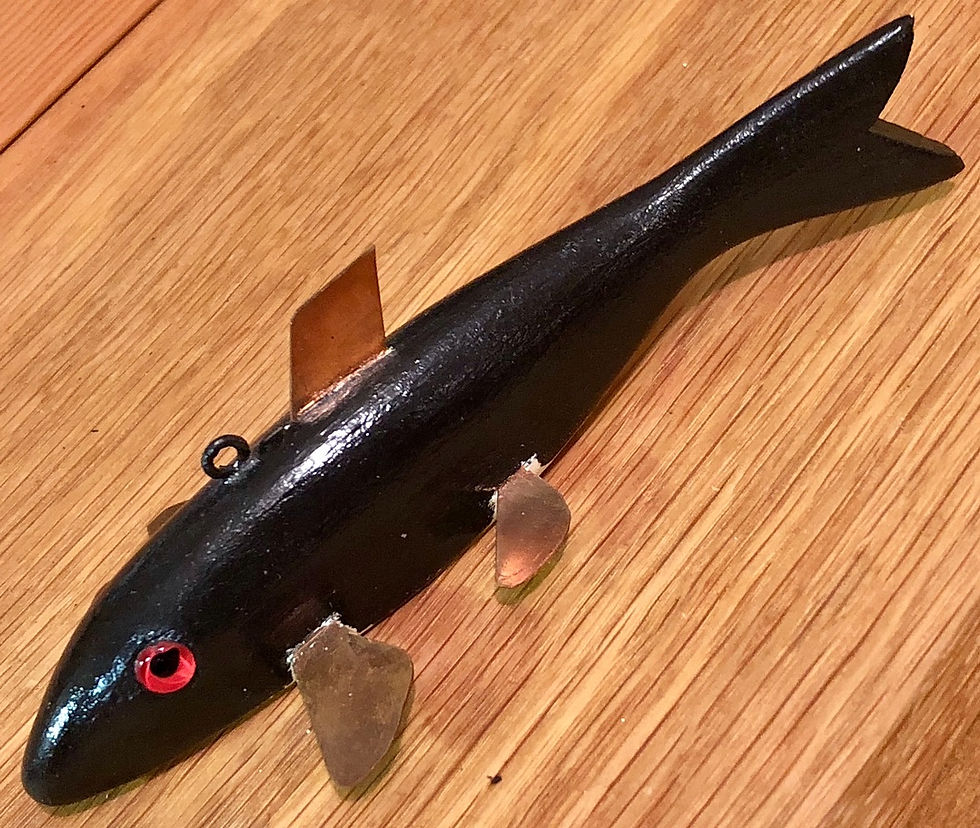
From this experience and subsequent encounters, I have been involved with between Indigenous Knowledge and western science it has been my experience they are entirely compatible. The use of one epistemology does not preclude the use of the other. However, I do sense a lot of mistrust between proponents of each epistemology. The western science epistemology continually tries to validate and determine the legitimacy of Indigenous Knowledge. The Indigenous Knowledge epistemology is weary of declaring “see… those observations and knowledge passed down through many generations is shown to be correct again.” When western science goes into validation mode it is seen to try to ‘6
delegitimize and exclude Indigenous Knowledge from public discourse. When all that is needed is to just shake hands and accept each other as a valid world view.
People who find out that I have a degree in geology, a master's in soils and geomorphology , and that I am currently pursuing a PhD. in archaeology ask me why? I think people indigenous or not are probing to see if I have turned away from the richness of all those tribal teachings and that knowledge or the primitive beliefs of native cultures. I have this answer for people I tell them that I wanted to understand the Earth from it's initial formation and the geologic processes that formed the landscape we see today. But when I want to know how to live in that landscape and become a part of the landscape and live in a sustainable way then I look to my tribal perspectives and the Indigenous Knowledge held there. I sum up this conversation by telling them that I went into archaeology with the idea to bring indigenous perspectives and sensibilities into the field to ensure that tribal people's interests are protected.


Enjoyed reading this, the challenge of two world views is interesting and can be perplexing, I think you have struck a balance, I don’t believe there is a single source of truth.